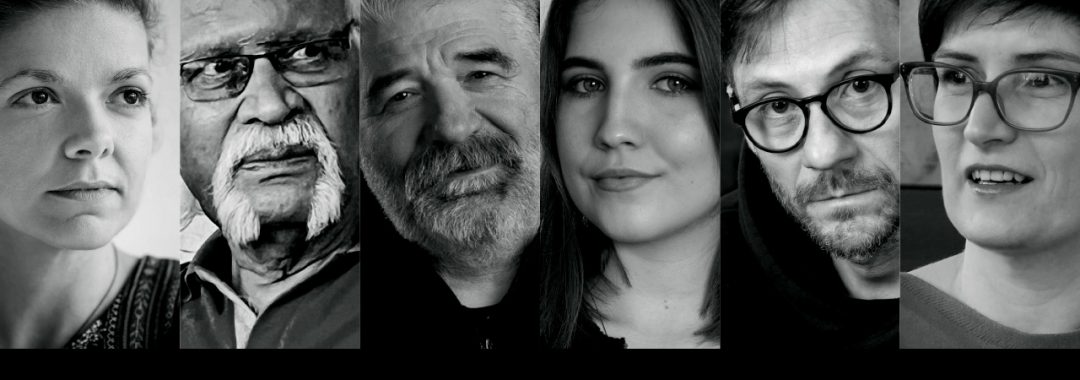
Members of the jury

Renata Darabant (AT)

visual artist, educator, cultural organizer
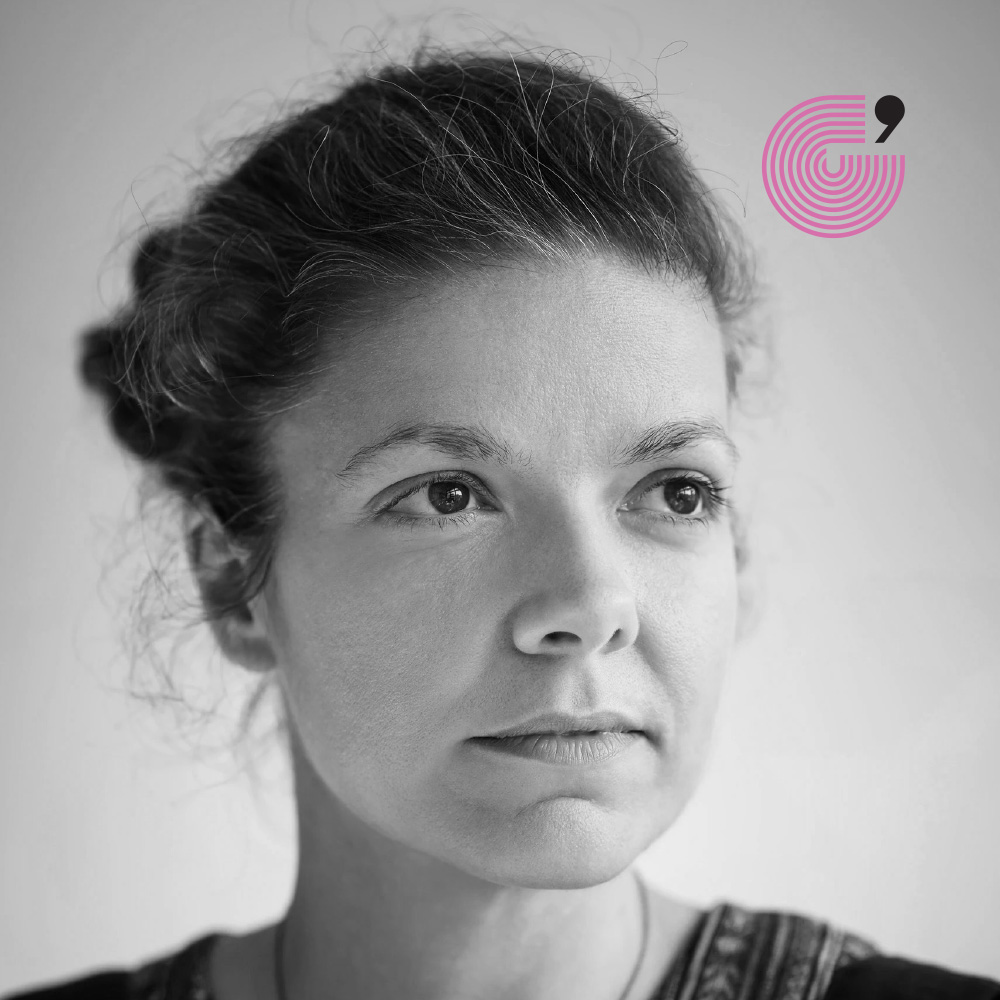
Renata Darabant is an artist, educator and cultural organiser who works at the intersection of printmaking, knowledge transfer and international artistic exchange. Born in Oradea, Romania, she studied at the University of Applied Arts in Vienna and at  the University of the Arts in Tokyo. Her practice is rooted in intaglio, photogravure and Japanese woodblock printing. She understands the studio as a space for cultivating knowledge through material encounter, not merely as a place of production.

She runs the Druckwerk Wien printmaking workshop and is Head of the Central Intaglio Print Workshop at the Institute of Fine Arts at the Academy of Vienna. There, she has developed a teaching practice that connects historical and sustainable printmaking techniques with contemporary artistic discourse. Alongside her teaching and artistic practice, Renata founded The Print Fest, an international printmaking platform connecting practitioners, institutions and communities across Europe. This project has received EU support and is hosted annually in different academies. Her recent project called ditto.press, is a collaborative publishing framework for artists’ editions in which currently she is working with a group of young artists on the first publication.

Her work consistently moves beyond national boundaries while remaining deeply committed to sustaining the conditions in which others can work, think, and connect.

Dr. Vidhyasagar Upadhyay (IN)

painter, printmaker, art educator, cultural organizer
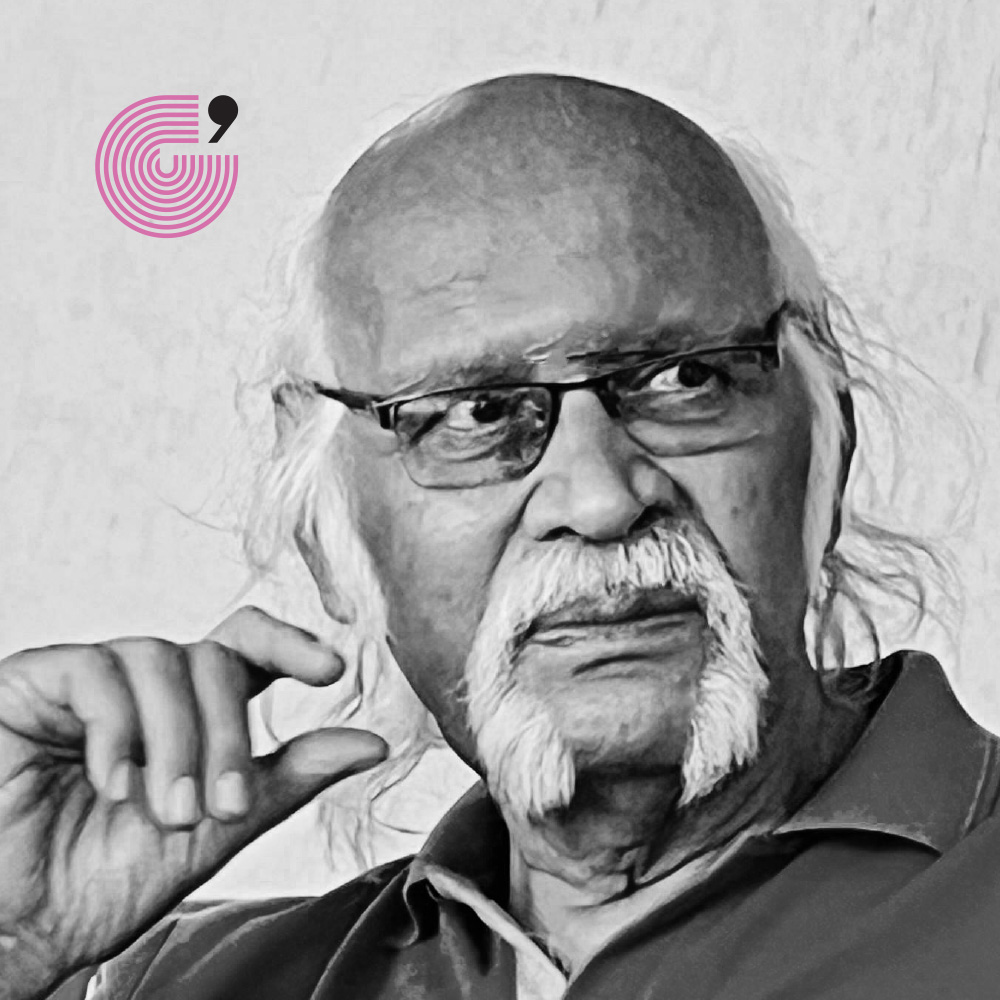
Dr. Vidhyasagar Upadhyay (India) is a painter, printmaker, art educator, and cultural organizer. He was born in 1948 in Partapur, Rajasthan, India. He received his Master’s degree in Painting from the University of Udaipur in 1970 and earned his PhD from Sukhadia University, Udaipur, in 1996. Between 1978 and 2007, he served as a university lecturer, head of department, and professor in the fields of painting and printmaking.

His artistic achievements have been recognized with numerous prestigious awards and distinctions. Among others, he received the National Award of the Lalit Kala Akademi (National Academy of Fine Arts, India), as well as several national awards and fellowships in the visual arts. The Government of Rajasthan honored him for his outstanding contribution to art education.

For more than four decades, he has been a prominent figure in contemporary Indian art. His solo exhibitions have been presented at leading museums, art institutions, and galleries across India, including venues in New Delhi, Mumbai, Jaipur, Ahmedabad, and Baroda, as well as in France. He has represented India at numerous international exhibitions and biennials in Japan, Bangladesh, Germany, Spain, Hungary, and the United Kingdom. His works are held in some of India’s most important public collections, including the National Gallery of Modern Art and the Lalit Kala Akademi, as well as in numerous public and private collections internationally.

Currently based in Jaipur, Dr. Upadhyay continues his artistic practice while actively contributing to the development of art education and international cultural exchange. His work brings together the rich traditions of painting and printmaking with contemporary visual thought, reflecting a lifelong commitment to artistic innovation and intercultural dialogue.

Prof. dr. István Erőss (HU)

István Erőss is a Hungarian visual artist who graduated from the Hungarian University of Fine Arts in 1995. He furthered his studies at several prestigious international institutions, including the Academy of Fine Arts Vienna, the Royal Academy of Art in The Hague and the University of Fine Arts in Marseille. In 2009, he earned his Doctor of Liberal Arts (DLA) degree and in 2015 he was appointed professor. Works as a professor at the Institute of Visual Arts of Eszterházy Károly University in Eger and since August 2021 he has been the rector of the Hungarian University of Fine Arts.

His artistic and academic career is characterized by extensive international engagement. He has undertaken numerous professional study trips to distant regions of the world, visiting Africa on five occasions and traveling to Asia more than fifty times. There he has participated as a guest artist, exhibitor, lecturer, curator and organizer of international artists’ camps and symposia.

He is the creator and organizer of the international exchange exhibition series SZEGMENS, whose events have been held in Hungary and several Asian countries. His artistic practice spans a wide range of media, from printmaking and installation art to sculpture.

For ten years, he was one of the organizers of the KorkéP International Artists’ Camp in Lăzarea (Gyergyószárhegy). He is also the initiator and professional advisor of the Szeklerland Graphic Biennial, founded in 2010, which has since become one of the most significant international graphic art exhibitions in the region.

Iulia Mirică (RO)

visual artist, graphic designer

Iulia Mirică is a visual artist and graphic designer whose practice operates at the intersection of narrative drawing, editorial illustration and the artistic book. Member of the Romanian Union of Visual Artists since 2025 and of the Bucharest Illustrators’ Club since 2026, she works both as an independent artist and as a professional in the media and independent cultural sectors. She holds both a Bachelor’s degree (2022) and a Master’s degree (2024) in Graphic Arts from the National University of Arts Bucharest. Her artistic practice focuses on ink drawing and the artist’s book, investigating memory as an active process of perception, reconstruction and reinterpretation. She approaches drawing as a deliberately slow and repetitive practice, working primarily in series in which the fragmentation of the image reflects the instability and fluidity of perception.

Her works have been featured in exhibitions including Timpul (ab)sorbit (Elite Art Gallery, 2025), Contemporary Drawing in Romania (Scemtovici & Benowitz Gallery, 2024), and Unsaved Stories (Galeria Laborna, 2024).

Working as a freelance illustrator and designer since 2019, she develops illustration and editorial design projects for clients in the cultural and publishing sectors. Her particular interests lie in narrative illustration and the visual construction of books. Her projects often originate from literary texts or culturally significant themes and are preceded by extensive research and visual conceptualization, resulting in works that extend beyond their immediate illustrative function and develop a strong narrative coherence of their own.

Since 2023, she has been actively collaborating with Atelierul de Grafică, a Bucharest-based organization behind several major cultural initiatives. She is also a member of the organizing team of Bucharest Graphic Days, where she is involved in the visual production and graphic identity of the festival. As one of the few platforms in Romania dedicated exclusively to graphic art, Bucharest Graphic Days brings together exhibitions, workshops and conferences featuring local and international artists and designers, serving as an important reference point for the professional community.

Alongside her artistic and cultural activities, she has been working at PRO TV since 2022, progressing from Junior to Senior News Graphic Designer. In this role, she develops and coordinates static and animated graphics for news broadcasts and television productions, creating graphic packages and visual identities within a live production environment characterized by strict deadlines and high technical standards.

Apor Ferencz S. (RO)
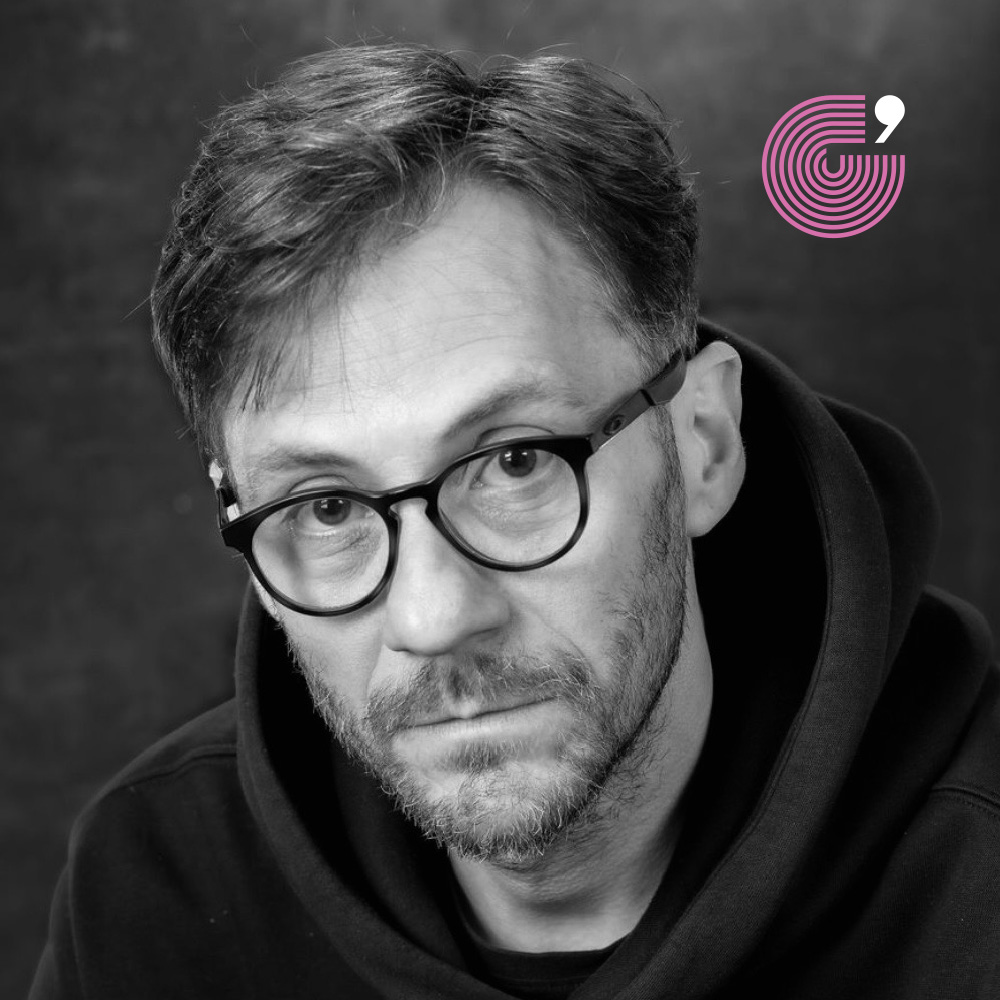
Ferencz S. Apor was born in Miercurea Ciuc in 1975. He completed his studies at the Nagy István High School of Arts in his hometown and later, between 1996 and 2001, he studied at the National University of Arts Bucharest. He is member of several professional organizations, including the Union of Visual Artists of Romania, the Barabás Miklós Guild, the Caffart Fine Arts Association and the MAMŰ Society (Budapest). He has curated or co-curated numerous exhibitions and professional events at institutions such as Pesti Vigadó, Kunsthalle Budapest, Transylvanian Art Centre (Sfântu Gheorghe) and the Szekler Museum of Ciuc (Miercurea Ciuc). Since 2017 he has served as the Artistic Director and Curator of the international Graphic Art Biennial of Szeklerland, organized in Sfântu Gheorghe and Miercurea Ciuc.

In his artistic practice, he primarily explores the problems of his own existence and environment. Themes of memory are strongly present in his works, which often carry a personal tone. He frequently creates installations, collages or reinterpretations using private objects and family photographs. His work often incorporates elements of social critique, while also leaving room for humor and an ironic tone. Found objects play an important role in his artistic vocabulary, and he occasionally incorporates elements of the material culture of his “province.”

His most notable professional recognitions include the Artist Grant of the Communitas Foundation (2003, 2010), the Budapest Gallery Scholarship (2006, 2019), the Hollósy Simon Scholarship (Hungarian Ministry of National Cultural Heritage / Illyés Public Foundation, 2006), the Barcsay Award (2011), the Special Prize of the 2nd Graphic Art Biennial of Szeklerland (2012), the three-year Artist Fellowship of the Hungarian Academy of Arts (2021–2024), as well as several creative grants from the National Cultural Fund of Hungary. He lives and works in his hometown, Miercurea Ciuc.

Dr. Beáta Bordás (RO)

art historian

Dr. Beáta Bordás (Romania) is an art historian born in 1986 in Sepsiszentgyörgy (Sfântu Gheorghe). She graduated from Babeș–Bolyai University in Cluj-Napoca, where she obtained her PhD in history in 2013. Between 2016 and 2021, she worked as a museologist and curator at the Art Museum of Cluj-Napoca. Since the summer of 2021, she has been serving as the director of the Transylvanian Art Centre in Sepsiszentgyörgy (Sfântu Gheorghe).

Her research focuses primarily on 19th- and 20th-century Transylvanian art, as well as the architecture of the historicist period in Transylvania. She is the author of numerous scholarly studies and several monographs dedicated to Transylvanian art and the region’s architectural heritage. Through her curatorial work, research and publications, she has made a significant contribution to the documentation, interpretation and promotion of Transylvania’s artistic and built heritage.


Useful information: shipping the artworks

If a work was selected by the jury for the second round of the 9th Szeklerland Graphic Art Biennial, the original artwork must be delivered to the biennial either by post or in person.
Please ensure that the prints:
– are numbered and signed according to international printmaking standards
– are sent without frame or passe-partout, in a folder or tube.
Further details in the call for entries.

Call for entries: 9th Szeklerland Graphic Art Biennial

The G9 call is now open to the national and international art community

In 2026, the Szeklerland Graphic Art Biennial will be held for the ninth time, continuing its role as a significant international event in the field of contemporary graphic art. This edition, G9, is announced under the theme DISTORTION, reflecting on the visual and conceptual shifts that shape our contemporary world. As in previous years, the core exhibition of the biennial will be presented in Sfântu Gheorghe and Miercurea Ciuc.

The concept of “distortion” is a highly complex and multifaceted phenomenon: it may refer to physical transformation, psychological displacement or even metaphorical distortions in values and moral perspectives. In contemporary art ,including graphic art, distortion is not merely a formal or geometric deviation, but a powerful expressive tool that enables critical interpretations of social, political and cultural phenomena.

“In today’s political and social context, “distortion” is particularly relevant: fundamental principles, meanings, and truths are shifting away from their original purpose, sliding toward new interpretations. In the artist’s hands, distortion becomes a communicative strategy: through the deliberate deviation of reality, it opens up new perspectives, prompts the viewer to question, and challenges conventional frameworks of interpretation.” – the biennial’s call states.


The call for the 9th Szeklerland Graphic Art Biennial encourages artists to use the tools of contemporary visual language to reflect on the fragility of human perception, the pressures of social and political realities, the shifting nature of historical narratives and the instability of truth.

Beyond ensuring a high professional standard, the biennial aims to remain a significant international forum for contemporary graphic art while contributing to the cultural and artistic vitality of the region. The official opening will take place in early October at the Transylvanian Art Centre in Sfântu Gheorghe and the Szekler Museum of Ciuc in Miercurea Ciuc. The exhibition and award ceremony will be complemented by a series of accompanying events held at various venues throughout the biennial period.

Artists may submit their applications until May 6, 2026, exclusively through the online platform available on the biennial’s website. Selected works will be included in both the exhibition and the official biennial catalogue. Detailed information about the call and participation regulations can be found here.

The event is jointly organized by the County Councils of Covasna, Harghita and Mureș, together with the Covasna County Cultural Center, the Szekler Museum of Ciuc, the Cultural and Arts Center of Lazărea, the Mureș County Museum and the Transylvanian Art Centre.

Further information is available on the biennial’s official website and social media platforms:

https://www.facebook.com/grafikaiszemle

https://www.instagram.com/graphicartbiennial_szeklerland

The G8 Exhibition Opened in Sfântu Gheorghe and the Award Ceremony Took Place

Italian Artist Marco Trentin Won the Biennial’s Grand Prize

On Friday, October 11, the opening of the 8th Szeklerland Graphic Art Biennial and the award ceremony took place at the Transylvanian Art Centre in Sfântu Gheorghe. At the event, festive speeches were delivered and awards presented by Mihály András Beke, First Consul of Hungary’s Consulate in Miercurea Ciuc, Sándor Tamás, President of the Covasna County Council, and István Erőss, Rector of the Hungarian University of Fine Arts. Representatives from the co-organizing institutions – the Szekler Museum of Ciuc, the Cultural and Art Centre of Lăzarea, the Mureș County Museum, and the Szekler National Museum – were also present, alongside prominent figures from the art world and representatives of the universities and organizations offering the awards.

As the host of the evening, Beáta Bordás, director of the Transylvanian Art Centre, welcomed the guests and emceed the event. She emphasized that the Biennial has grown into an internationally recognized event, becoming an accepted and relevant platform for the best graphic artists from various nations to showcase their work, making it a great honor for the Transylvanian Art Centre to host, for the second time, an exhibition featuring the works deemed the most significant.

Sándor Tamás, president of Covasna County Council, greeted the gathering on behalf of the hosts and the three Szekler counties. “Szeklerland, our homeland, is a shared creation, belonging to all of us. Together, we shape it into the region where we want to live. This graphic biennial is a part of that process, having become a defining event in the cultural landscape of Szeklerland. Its goal was twofold: to draw attention to contemporary graphic art in Szeklerland and to look outward, understanding how international contemporary graphics reflect the happenings of the wider world. (…) This year, the event saw the largest number of participating artists in its 14-year history. A total of 926 artists from 68 countries submitted their works. We are proud that the Szeklerland Graphic Art Biennial has become a recognized professional competition at the international level, and its prestige continues to grow among visual artists”, stated Sándor Tamás, president of Covasna County Council.

In his ceremonial speech, Mihály András Beke, First Consul of the Consulate General of Hungary in Miercurea Ciuc, emphasized the importance of art: Undoubtedly, the works exhibited here are not only manifestations of creativity, but also visual interpretations of both the loss and the significance of balance. Today, when we reflect on our world, we must recognize that art may be more important than ever. (…) In an age filled with uncertainties and tensions, art has the power to express something essential about our tension-ridden world”, he remarked, offering his recognition and congratulations to the organizers.

In his speech, Apor S. Ferencz presented the concept of this year’s event and the theme of the call for entries. G8 invited visual interpretations on the significance of balance and, conversely, the issue of imbalance, aiming for artistic intent to focus on the social role of the image through the artist’s creative attitude. Thus, the call attracted artists who seek to innovate the processes of contemporary graphic art with a message for the future. The possible responses generated by the works serve as a mirror of critique for today’s society. In the exhibition in Sfântu Gheorghe, visitors can view 140 works by 137 artists from 28 countries, all addressing the theme of imbalance.

Next, Prof. Dr. István Erőss, rector of the Hungarian University of Fine Arts, praised the event. From the very beginning, he has closely followed the biennial, and through his professional expertise and dedicated relationship-building efforts, alongside his attentive, fatherly concern, he has greatly contributed to its international reputation. In his speech, he emphasized the importance of the biennial’s contributions, which go beyond fostering and maintaining professional connections to becoming an invaluable legacy for future generations of professionals.

Art historian Ágnes Képiró praised the material submitted for the call of the eighth edition and discussed the exhibition. “There is no doubt about the experience the exhibition offers, as we are at the opening of a high-level international graphic arts showcase, where the record number of works received engage in a strong dialogue, reflecting the international trends in contemporary graphic art”, she stated. She further emphasized that the recognition and keen attention of foreign professionals is best demonstrated by the fact that numerous artists submitted their works from across the globe, from America to Australia, through Europe and Asia.

István Imreh, the director of the Covasna County Cultural Centre that organized the event, expressed his gratitude to all those who made the event possible: he thanked the supporting institutions, organizations, and universities, the partner institutions involved in the organization and their staff, and last but not least, the small organizing team.

After the speeches, the awards ceremony followed. The winners of the biennial are as follows:

  • Grand Prize of the Biennial: Marco Trentin (IT)
  • Imre Nagy Award: Laura Czuczor (HU)
  • Pál Nagy Award: Vasiliki (Vasso) Chatzimanoli (GR)
  • Sándor Plugor Award: Marlena Biczak (PL)
  • MAMŰ Society Cultural Association Award: Marlena Biczak (PL)
  • Lăzarea Artist Colony Award: Andrzej Wochnik (PL)
  • Partium Award from the Partium Christian University: Eszter Nóra Dicső (HU)
  • Imre Baász Award: Teerawoot Com-on (TH)
  • Award from the Hungarian Consulate in Csíkszereda: Satitkun Mongkolruangrit (TH)
  • Pulzus Artist Colony Award: Jagoda Jaworska (PL)
  • Hungarian University of Fine Arts Award: Katarzyna Tereszkiewicz (PL)
  • Eszterházy Károly University Award: Petru Radu Buba (RO)

The event was organized jointly by the councils of Covasna, Harghita, and Mureș counties, along with the Covasna County Cultural Centre, the Szekler Museum of Ciuc, the Transylvanian Art Centre, the Cultural and Art Centre of Lăzarea, and the Mureș County Museum.

The events of the 8th Szeklerland Graphic Biennial began in Sfântu Gheorghe with two exhibition openings

The series of events for the G8 commenced in Sfântu Gheorghe with the opening of an exhibition by Nastazja Ciupa (PL), the grand prize winner of the 7th Szeklerland Graphic Art Biennial. The exhibition, held at the Arcaded House (Lábasház), was inaugurated by art historian Dr. Iréne Kányádi, who first introduced the exhibiting artist.

Nastazja Ciupa was born in 1991 in Katowice, Poland. She is a lecturer at the Lithography Studio and the Classical Graphic Techniques Studio of the Warsaw Academy of Fine Arts. Her research interests and artistic practice focus on human perception, particularly its internal visual aspects and the interpretation of reality, where space and time are two fundamental dimensions. She strives to achieve a post-view of the meanings of emptiness through non-obviousness, fragmentation, and transience. The images of large heaps, old mines, forgotten factories, and gray blocks have gained new forms in her imagination, creating structures that always leave the recipient with the impression of being overwhelmed, emptied, and burdened by the weight of the forms she creates in her works.

In her exhibition titled My Non-Places, the artist seeks to address the phenomena of transience and emptiness through the gray blocks of old mines and abandoned Silesian factories that remain in her environment. She transforms these gray masses into heavy forms and structures over time, creating new visual solutions that are realized in both space and time.

“The artist’s lithographs attempt to find answers to a kind of crisis situation. The high level of technical execution and her lyrical sensitivity toward these Central and Eastern European landscapes, which significantly shape our visual memory, result in works that have justifiably earned the grand prize two years ago”, stated Iréne Kányádi. Furthermore, she added that Nastazja Ciupa’s lithographs, both in their choice of themes and in their meticulous execution, represent temporal and spatial transfers, serving as sensitive, and perhaps idealized, memory images of the artist’s place of origin. The series is a journey home, to the artist’s homeland, depicting mental spaces that we begin to idealize over time, as these abandoned industrial areas shape our existence.

Personal icebergs at the MAGMA Contemporary Exhibition Space

The opening of the exhibition An Iceberg of One’s Own by Ferenc Gróf and Zsófia Gyenes took place at the MAGMA Contemporary Exhibition Space. The exhibition was inaugurated by Noémi Bíró, a doctoral candidate at the Doctoral School of Philosophy at Babes-Bolyai University. After the opening, Ferenc Gróf conducted a guided tour of the exhibition.

The exhibition showcases works by the artist duo Gróf & Gyenes created over the past year, which seek to construct new building blocks inspired by diagrams, infographics, and political slogans reflecting ecological and economic despair.

Zsófia Gyenes (b. 1977, Budapest) is a textile designer and visual artist. She completed her studies in Budapest and Paris, graduating from the textile department of ENSAD (École Nationale Supérieure des Arts Décoratifs) in 2004. After nearly twenty years of working as a textile designer in the fashion, interior design, and automotive industries, she embarked on an independent artistic practice in 2022.

Ferenc Gróf (b. 1972, Pécs) is a founding member of the Société Réaliste group, where he developed a distinctive artistic language using linguistic and typographic elements, statistics, and cartographic symbols to examine social processes and reveal connections between the past and present. Following the dissolution of the group, he retained this perspective, with his works now engaging with ideological imprints at the intersection of graphic design and spatiality.

Zsófia Gyenes, a color and textile designer, and Ferenc Gróf, a visual artist, began their collaborative work in 2022. After over twenty years in Paris, they relocated to Orléans, where they established their joint studio in October 2023. Their collective works are created at the intersection of textile design and visual art. The exhibition will be on view until 17 January 2025.

The 8th Graphic Art Biennial of Szeklerland Kicks Off in Miercurea Ciuc

On Wednesday, October 9, the series of biennial events in Miercurea Ciuc began with the exhibition opening of students from Partium Christian University in Oradea, followed by the official opening of the 8th Graphic Art Biennial of Szeklerland at the Szekler Museum of Ciuc.

The Crossroads exhibition, showcasing works by students of Partium Christian University, was opened by Dr. Iréne Kányádi, art historian and lecturer at the university. She mentioned that the works of the university’s students had already been included in previous editions of the biennial. Apor S. Ferencz, the biennial’s curator, highlighted the long-standing, close professional collaboration with the university in Oradea.

The exhibition offers insight into the works of students from the Graphic Design BA and Visual Communication MA programs at Partium Christian University in Oradea. Visitors can explore the intersection and dialogue between the works of students specializing in Graphic Design and Animation, showcasing the diversity of both undergraduate and master’s programs.

What the audience can see here are posters made from the students’ diploma projects and photo documentation of their works. We have divided the exhibition into three major thematic groups. The title refers to the fact that we are not only presenting applied graphic works, but also autonomous and experimental pieces, as well as graphic design and animated works. In this way, ideas and genres intersect”, explained Dr. Iréne Kányádi.

The exhibiting students are: Anita-Vivien Antal, Borbála Biró, Arnold Bone, Zsuzsanna Ercse, Eszter Fazakas, Péter Gáspár, Panna Horváth-Kovács, János Janó, Kata Király, Alexandra Miclo, Villő Májai-Varga, Rebeka Oláh-Székely, Viktória Pintér-Koroknai, Ákos Solymosi, Csilla-Fruzsina Szabó, and Anita Székely. The exhibition is open to the public until December 31.

G8 Opening Ceremony in Miercurea Ciuc

The opening of G8 took place at 6:00 PM, with speeches by Dr. Aranka Karda-Markaly, Director of the Szekler Museum of Ciuc; István Dolhai, Consul General of the Consulate General of Hungary in Miercurea Ciuc; Attila Korodi, Mayor of Miercurea Ciuc; Prof. Dr. István Erőss, Rector of the Hungarian University of Fine Arts; Apor S. Ferencz, curator of the biennial; and art historian Eszter Túros.

In his celebratory speech, István Dolhai, Consul General of the Consulate General of Hungary in Miercurea Ciuc, congratulated the organizers for hosting an event that has grown into an internationally acclaimed occasion over the past sixteen years. He emphasized that in today’s world, the role of art is more important than ever: “In this era, woven with uncertainties and tensions, art has the power to say something essential about this world… Today, we are here not only to celebrate visual art, but to engage in a dialogue with the works, and through them, with ourselves.

Attila Korodi, Mayor of Miercurea Ciuc, spoke about the challenges of imbalance and the search for balance, highlighting the relevance of the biennial’s theme.

Prof. Dr. István Erőss, Rector of the Hungarian University of Fine Arts and one of the founders of the biennial, praised the event and spoke about its beginnings and evolution.

In his speech, Apor S. Ferencz, the curator of the biennial, drew attention to issues such as political division, social inequalities, wars, climate change, and natural disasters: “In recent years, numerous geopolitical events and ecological phenomena around the world have prompted us to scrutinize our collective vision of the present and the future more seriously.

Therefore, the 8th Graphic Art Biennial of Szeklerland sought visual interpretations addressing the significance of balance and the absence thereof, focusing on how artistic intention, through the creator’s attitude, reflects the social role of the image. The organizers welcomed submissions from all artists who aim to renew contemporary graphic techniques while conveying messages for the future, thereby holding up a critical mirror to society as a whole through the responses generated.

The growing number of participating artists and the high professional quality of their submitted works are the best proof of the popularity of the Graphic Art Biennial of Szeklerland. This year, we received the most submissions in the event’s history, with 926 artists sending in 2,046 entries from 68 countries around the world. We are particularly pleased that, as a result of several years of professional relationship building, the number of works submitted by art university students has also significantly increased”, emphasized Apor S. Ferencz, the curator of the biennial.

Eszter Túros, art historian, emphasized that the Szekler Museum of Ciuc is hosting the Graphic Art Biennial of Szeklerland for the second time, and over the years, it has become an increasingly prestigious event of significant professional caliber recognized worldwide, which is an unprecedented phenomenon in this region. This is thanks to the biennial’s commitment to showcasing contemporary graphic trends while providing space for both traditional methods and those experimenting with the intention of renewal.

The exhibition features the works deemed best by the professional jury on the theme of balance and its absence. In Miercurea Ciuc, 111 creators from 27 countries are exhibiting. The exhibition is open to the public until December 31.

The event was organized jointly by the councils of Covasna, Harghita, and Mureș counties, along with the Covasna County Cultural Centre, the Szekler Museum of Ciuc, the Cultural and Art Centre of Lăzarea, and the Mureș County Museum.

At the beginning of October, contemporary international graphic art will take center stage in Miercurea Ciuc and Sfântu Gheorghe

The events of the 8th Graphic Art Biennial of Szeklerland are about to kick off. The biennial’s opening ceremony, awards gala, and accompanying events will take place between October 9 and 11 in Miercurea Ciuc and Sfântu Gheorghe. 

On Wednesday, October 9, at 5:00 PM, the series of biennial events will begin in Miercurea Ciuc at the Szekler Museum of Ciuc with the exhibition opening of students from Partium Christian University in Oradea. The Crossroads exhibition offers a glimpse into the works of students from the Visual Arts – Graphic Design BA and Visual Communication MA programs at Partium Christian University in Oradea. Visitors can explore the intersection and dialogue between the works of students specialising in Graphic Design and Animation. The exhibition will be opened by Iréne Kányádi, PhD, an art historian and lecturer at Partium Christian University.
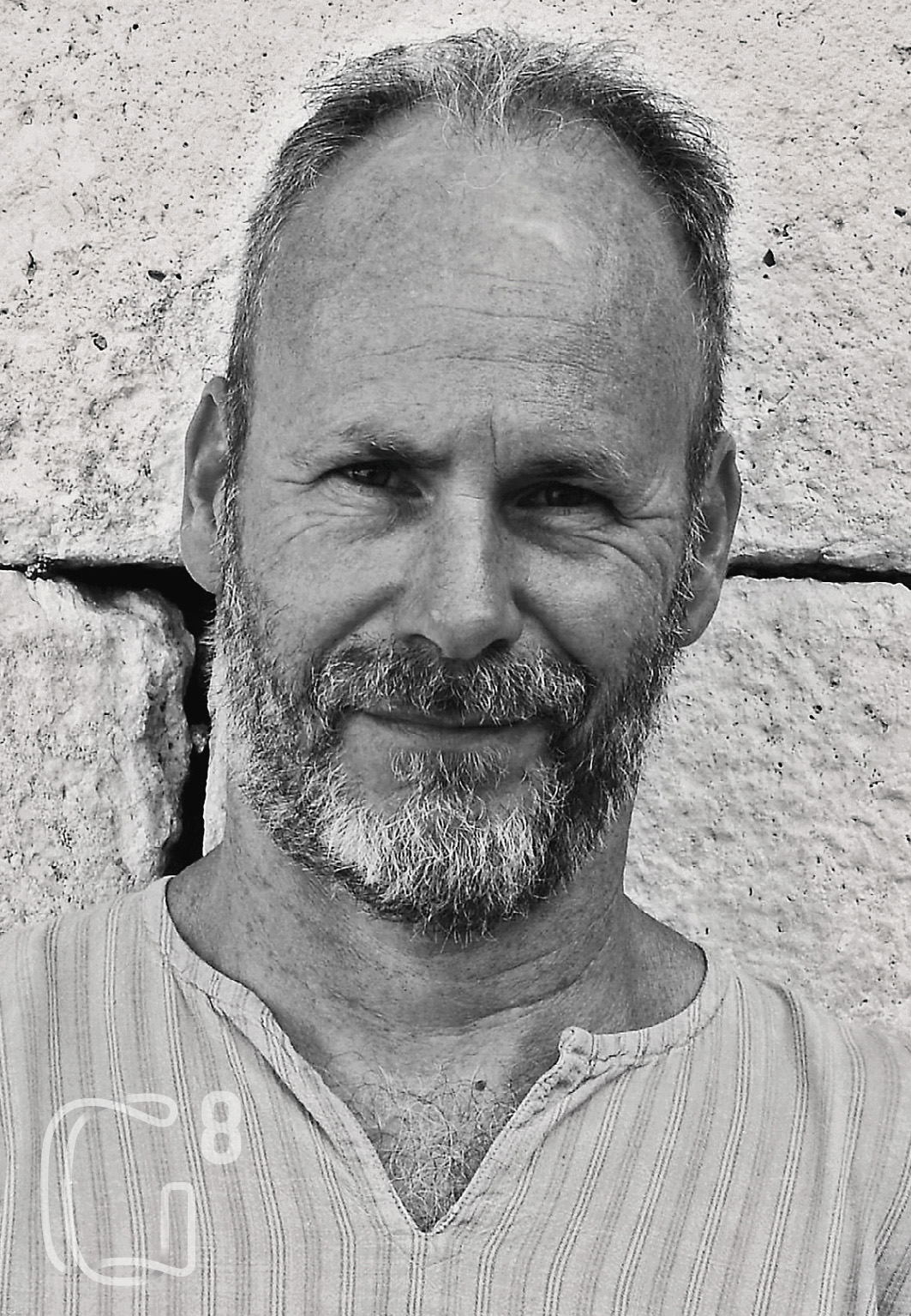
Following this, on Wednesday, October 9, at 6:00 PM, the opening of the 8th Graphic Art Biennial of Szeklerland will take place at the Szekler Museum of Ciuc. The event will be inaugurated by Apor S. Ferencz, the biennial’s curator, and art historian Eszter Túros.

The 8th Graphic Art Biennial of Szeklerland invited visual interpretations addressing the significance of balance and the questions surrounding its absence, focusing on how artistic intention reflects the social role of the image through the creator’s attitude. Organisers welcomed submissions from all artists who aim to renew contemporary graphic techniques while conveying messages for the future, holding up a critical mirror to society through the possible responses generated. (A. S. F.)

A total of 926 artists submitted 2,046 entries from 68 countries in response to the call for submissions. The exhibitions will showcase the works deemed best by the professional jury, featuring contributions from 111 creators across 27 countries in Miercurea Ciuc. The biennial’s exhibitions in Miercurea Ciuc will be open to the public until December 31.

Events in Sfântu Gheorghe

On October 10 (Thursday) at 5:00 PM, the biennial’s series of events in Sfântu Gheorghe will begin with the opening of the exhibition by Nastazja Ciupa (PL), the grand prize winner of the 7th Szeklerland Graphic Art Biennial, at the Arcaded House. In the exhibition titled My Non-Places, the artist seeks to explore the phenomenon of transience and emptiness through the grey blocks of abandoned Silesian factories and old mines that remain in her surroundings. Over time, these grey masses are transformed by the imagination into heavy forms and structures, creating new visual solutions in space and time. An opening speech will be given by Iréne Kányádi, PhD, an art historian. The exhibition will be open for visits until October 30.

Following this, on October 10 (Thursday) at 7:00 PM, the exhibition titled An Iceberg of One’s Own by Ferenc Gróf and Zsófia Gyenes will open at MAGMA Contemporary Art Space. Noémi Bíró, a doctoral candidate at the Philosophy Doctoral School of Babeș-Bolyai University, will officiate the opening. After the opening, Ferenc Gróf will conduct a guided tour.

On Friday, October 11, at 6:00 PM, the Sfântu Gheorghe opening ceremony and awards gala of the 8th Graphic Art Biennial of Szeklerland will take place at the Transylvanian Art Centre, showcasing 140 works by 137 artists from 28 countries. The event will be opened by Apor S. Ferencz, the curator of the biennial, and art historian Ágnes Képiró. The exhibition will be open to the public until November 30.

The 8th Graphic Art Biennial of Szeklerland is being organised jointly by the councils of Covasna, Harghita, and Mureș counties, together with the Covasna County Cultural Centre, the Szekler Museum of Ciuc, the Cultural and Art Centre of Lăzarea, and the Mureș County Museum.

Further details can be found on the official website of the biennial at www.gbiennial.ro, as well as on the event’s Facebook and Instagram pages.

Awards 2024

Awards 2024

Main Prize of the Biennial 

Marco Trentin / IT
Private identity n2
Woodcut, inkjet print
50 x 70 / 2024

Marco Trentin / IT
Private identity n4
Woodcut, inkjet print
50 x 70 / 2024

“Nagy Imre” Prize

Laura Czuczor / HU
Nutshell 1-3
Lithography
96 x 60 / 2023

“Nagy Pál” Prize

Vasiliki (Vasso) Chatzimanoli / GR
Untitled
Aquatint
40 x 50 / 2023

Vasiliki (Vasso) Chatzimanoli / GR
Untitled
Aquatint
40 x 50 / 2023

“Plugor Sándor” Prize

Marlena Biczak / PL
Memory 1
Aquatint
70 x 100 / 2022

Marlena Biczak / PL
Memory 2
Aquatint
70 x 100 / 2022

MAMŰ Society Prize 

Karol Polak / PL
Saturn Devouring His Son
Inkjet print
95 x 98 / 2024

Lăzarea Art Camp Prize

Andrzej Wochnik / PL
Apoptosis II
Silkscreen
70 x 100 / 2023

Partium Award by the Partium Christian University 

Dicső Eszter Nóra / HU
Wanna play?
Silkscreen
100 x 70 / 2023

“Baász Imre” Prize

Teerawoot Com-on / TH
Family Relationships
Woodcut
61 x 84 / 2024

The prize of the Consulate General of Hungary in Miercurea Ciuc 

Satitkun Mongkolruangrit / TH
Between us
Mezzotint
59,5 x 79,5 / 2022

Pulzus Art Camp Prize 

Jagoda Jaworska / PL
The Apple of My Eye
Linoleum cut
100 x 70 / 2024

The prize of the Hungarian University of Fine Arts 

Katarzyna Tereszkiewicz / PL
Identity projection III
Offset, Individual technique
69×100 / 2023

Eszterházy Károly University’s Prize

Buba Petru Radu / RO
Relax, Fear, Flood
C-print
60 x 45 / 2024

The awards and sponsors:

Main Prize of the Biennial 3000 EUR
– Covasna County Council, Covasna County Cultural Centre

“Nagy Imre” Prize 1000 EUR
– Harghita County Council, the Cultural and Art Centre of Lăzarea

“Nagy Pál” Prize – 1000 EUR
– Mureş County Council, Mureş County Museum

“Plugor Sándor” Prize – 1000 EUR
– Covasna County Council, Covasna County Cultural Center

MAMŰ Society Prize –  Invitation to a professional program and 250 000 HUF
MAMŰ Society Cultural Association, Budapest

Lăzarea Art Camp Prize – Invitation to a professional program and 500 EUR
– The Cultural and Art Center of Lăzarea

Partium Award by the Partium Christian University – Individual Exhibition and 2000 RON
Partium Christian University, Department of Fine Arts, Oradea

“Baász Imre” Prize – 500 EUR
– Association of Romanian Artists – Covasna County Branch

The prize of the Consulate General of Hungary in Miercurea Ciuc – 500 EUR
– Consulate General of Hungary in Miercurea Ciuc, MVM Energy Romania

Pulzus Art Camp Prize – Invitation to a professional program and 150 EUR
– Pulzus Art Camp, Odorheiu Secuiesc

The prize of the Hungarian University of Fine Arts – Individual Exhibition
Hungarian University of Fine Arts, Budapest

Eszterházy Károly University’s Prize – Individual Exhibition
Eszterházy Károly University, Visual Arts Institute, Eger

The award-winning works have been selected for the G8

Between 14-16th of June the jurying process of the 8th Graphic Art Biennial of Szeklerland took place at the Transylvanian Art Centre in Sfântu Gheorghe. An international jury of seven members chose the G8 winners based on the original artworks selected in the first round. The members of the jury were: https://gbiennial.ro/members-of-the-jury-3/ Among the laureated artists, this year we can find representatives of Italy, Poland, Hungary, Greece, Romania and Thailand. The organizers will publish the list of the winners before the opening of the biennial, in early October, 2024.

Members of the jury

Norbert Filep (RO)
artist

He was born in 1990 in Baia Mare (Nagybánya). He graduated from the  University of Art and Design in Cluj-Napoca (Kolozsvár) in 2015, at present he is a doctoral candidate at the same university at the Graphics Faculty.  In recent years he has been applying different procedures in his art, articulated mostly through the use of drawing as a central mechanism for his conceptual approach concerning abstraction. Whether he draws simple lines with a ruler, or he uses grids taken from the basics of tehnical drawing, whether he borrows texts from different art catalogues and art magazines, his visual vocabulary remains based on a simple concept defined by the information itself. Thus, he is committed to discovering new possibilities of the abstract through redefining different processes of generating information on basis accumulation and repetition. His artworks were presented in several individual and group exhibitions in Bucharest, Cluj-Napoca, Bruxelles, Rotterdam, Timișoara and Stockholm. His works are included in private and public collections, among which the National Museum of Contemporary Art of Romania (MNAC), the Museum of Recent Art, the ING – București Collection, the Banca Transilvania – Cluj-Napoca Collection. He lives and works in Cluj-Napoca.

Prof. dr. Erőss István (HU)

Hungarian artist István Erőss, he graduated from the Hungarian University of Fine Arts in 1995 as a printmaker, but he also attended other institutions, such as the Academy of Fine Arts Vienna, the Royal Academy of Art (The Hague) and the University of Fine Arts in Marseille. He defended his DLA thesis about ”Nature Art” in 2009. Works at Eszterházy Károly University, Eger, as professor at the Visual Arts Institute, from August 2021, he is the rector of the Hungarian University of Fine Arts. He has taken numerous professional trips to remote countries: he has been to Africa five times and to Asia more than forty times as a guest artist, exhibitor, lecturer or curator of different artists’ camps and symposia. He is exhibitor and organiser of the series of international exchange exhibitions entitled SEGMENT, consisting of twice nine events held in Hungary and several Asian countries up to now. He works in different genres ranging from printmaking through installation to sculpture.


Ciprian N. Isac (RO)
Graphic designer, Graphic Workshop
Curator Bucharest Graphic Days

He was born in 1968 Hunedoara. He graduated from Bucharest National University of Arts, in 2001.Co-founder of the Atelierului de grafică, București (Bucharest Graphics Workshop), (2005). Graphic designer specialised in book and event design, he is passionate of old things, archivation, blog and photo archive adminsitrator. Initiator and producer of events on diverse graphics and related topics: exhibitions, workshops, publications. Fourteen years ago he started a project of research concerning Romanian graphics in the communist period: posters, letter, logo, advertising. Ironically called “Graphics without computer”, the project materialized in 4 books published by the Atelierul de grafică, București and one book was published in collaboration with the german publisher  Gestalten of Berlin (Iron Curtains Graphics – Gestalten 2012) – with important records in the specialized publications all over the world. On the occasion of the same research he launches the web platform GraphicFront.ro with two main components: an acrhive of images with old graphics from the time of communism and a blog with cultural news. In 2018, amid the discontent with the political situation in Romania and following numerous street protests he initiates and launches the socio-political poster project with international participation called Roar Poster Show, including 5 exhibitions, workshops, talks in Bucharest and in other 2 cities of the country. In 2022 he founded, and since then he has been the producer of the biggest graphics festival, called Bucharest Graphic Days, an event spread over three weeks, focusing on exhibitions, conferences, workshops, artist colonies. 

Apor Ferencz S. (RO)

The artist was born in 1975, he graduated from the Bucharest National University of Arts in 2001. He is member of several professional organizations,  such as the Romanian Artists Union (UAP),  the MAMŰ Society of Budapest and the Caffart Fine Art Association. Founder and editor of the online art forum Fórumtizenöt (Forum fifteen) and active organizer of several local exhibitions and professional events, he received many awards and scholarships for artists, among which the Hollósy Simon scholarship (2006), the Communitas scholarship (2003, 2010), the Barcsay Award (2011), the Budapest Galery scholarship (2006, 2019), the Art Scholarship of the Hungarian Academy of Arts (2021). From 2017 he has been the appointed curator of the  Graphic Art Biennial of Szeklerland in Sfântu Gheorghe (Sepsiszentgyörgy). In his works he searches for anwers to the problems of his personal existence, to the questions of his interpersonal relationships and of the surrounding social environment. But he also puts emphasis on the topic of remembering, as well. What are memories and how is it possible to express them in arts, which can be the graphical forms of remembering? In the background of the contents of his art there frequently appear sociocritical elements, as well, but at the same time also humourous and ironic aspects are present. Found objects have a great role in his toolbar and he also integrates in his artworks some elements of the material culture of his ”province”, emphasizing in this way the importance of the local and traditional values. It is extremely important for him to express his message through techniques and procedures of the contemporary art and think about the possibilities of their graphic representation. 

Imre Tolnay DLA (HU)
artist, university professor – Széchenyi István University, Győr (HU)

He was born in Győr in 1968. He graduated from the Faculty of Printmaking of the Hungarian University of Fine Arts in 1992-ben, in 1994 received a scholarship within an exchange program at the Royal Academy of Art, the Hague. Between 1997-2000 he attended the doctoral school of the Faculty of Art of the University in Pécs. In 2003 he obtained his doctoral- degree (DLA), then in 2013 the habilitated doctorate (PTE). In 2009 he went with a two-month scholarship to the Hungarian Academy of Rome. From 1991 he has been participating in several important exhibitions at home and abroad, at different symposia, he has been exploring different genres of the visual arts (painting, graphics, photography, installations) and published articles in inland professional journals. He has participated at more than 50 individual and for about two hundred group exhibitions, his works got to 21 countries of the world. He has won several prizes, his artworks can be seen in many private and public collections at home and abroad. He is a university professor at Széchenyi István University of Győr.

Dr. Bordás Beáta (RO)

Dr. Beáta Bordás is an art historian. She was born in Sepsiszentgyörgy/ Sfântu Gheorghe in 1986. She graduated from Babeș–Bolyai University in Kolozsvár/Cluj – Napoca, where she obtained her degree of Doctor of History in 2013. During the period of 2016-2021 she was a museologist and curator of the Art Museum in Kolozsvár/Cluj-Napoca and since the summer of 2021 she has been director of the Transylvanian Art Centre in Sepsiszentgyörgy/ Sfântu Gheorghe. Her main research areas are Transylvanian art of the 19th and 20th century and Transylvanian architecture of the age of historicism.  There have been published several  individual volumes and studies about Transylvanian art and Transylvanian built heritage written by her.

Gábor Gyenes (SK)
fine artist, assistant professor – Academy of Fine Arts, Faculty of Graphics (SK)

He was born in Kosice (Kassa) in 1984. He graduated from the Faculty of Graphics of the Academy of Fine Arts in Bratislava (Pozsony), then he completed his doctorate at the Academy of Arts in Banska Bystrica (Besztercebánya). At present he is assistent professor at the Faculty of Graphics of the Academy of Fine Arts in Bratislava (Pozsony) and leader of the artist group IN SITU. He works as a graphic artist, creates site-specific art and illustrates books. Art represents to him a communication form through which he generates dialogues, his works are characterized by a diversity of genres: from classical graphics to videos, from book illustrations to bioart. The  main concept of his artworks is based on recurrent topics dealing with the relationship between man and his environment, respectively he focuses upon the scientific investigation of the world, as well. At the same time his illustrations are based on  drawing, on the play with spaces and on some surprising approaches.